
21/07/2025
Why do rashes increase in the summer months?
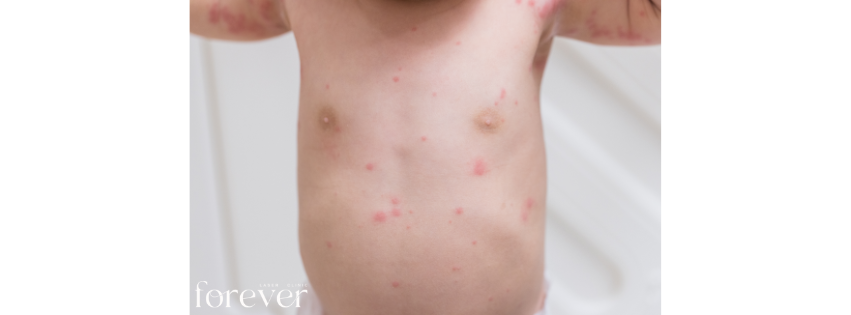
Summer is a season of joy and carefree days for children, but it is also the period when there is an increase in skin rashes. Heat, humidity, sweat, and frequent contact with water or sand create conditions that favour irritations and infections.
Children’s rashes can be entirely harmless, such as a mild heat rash, or also a sign of an infection or allergic reaction that requires medical evaluation. Proper information and observation of symptoms is the “key” for parents to recognise when they should worry and when they shouldn’t.
Common causes of rashes in children in summer
The most common causes of rashes in children during the summer months are related to heat, sweating, allergic factors, and microbial infections.
Heat and sweat
Heat causes obstruction of sweat glands, resulting in small red bumps known as heat rash or miliaria. It usually appears on the neck, chest, back, and limb folds, causing itching and slight stinging.
Allergic reactions
Contact with sunscreens, insect repellents, plants, or clothes made from synthetic materials can cause allergic dermatitis. Some foods or medications can also cause urticaria — a type of rash accompanied by redness and intense itching.
Microbial and viral infections
Increased temperature and sweat facilitate the growth of bacteria and fungi, which can cause skin infections. At the same time, children come more frequently into contact with other children, which facilitates the transmission of viral rashes, such as those associated with viruses like coxsackie or chickenpox.
Contact with the sea or pool
Sea water, chlorine, and sand can irritate, especially if the child has sensitive skin or pre-existing dermatitis.
How to distinguish a simple rash from a worrying rash
Although most children’s rashes are harmless and resolve within a few days, some signs require greater attention.
Harmless rashes
The most common and mild rashes:
- Are limited to a small area of the body.
- Appear after exposure to heat or sweat.
- Resolve within a few days with basic care.
- Are not accompanied by fever or other symptoms.
Examples: heat rash, mild allergic reaction to an insect or sunscreen.
Rashes that need medical evaluation
Consult a paediatric dermatologist or paediatrician if the rash:
- Is accompanied by fever, malaise, or drowsiness.
- Spreads rapidly across the body.
- Shows blisters, fluid leaking, or signs of infection.
- Appears around the eyes, mouth, or genitals.
- Doesn’t resolve within a few days or worsens.
Also, rashes that appear after taking medication should be evaluated immediately, as they may indicate an allergic reaction.
First-aid care at home
For most children’s rashes, proper home care is enough to relieve symptoms and speed up recovery.
Keeping cool
- Keep the child in a cool environment and avoid excessive heat.
- Dress them in cotton, loose clothes that allow the skin to breathe.
Cleanliness and bathing
- Give short, lukewarm showers 1–2 times a day, without harsh soaps.
- Avoid rubbing the area — pat gently with a soft towel.
Skin hydration
- Use a gentle moisturising lotion or aloe vera to soothe the skin.
- For itchy rashes, calamine lotion or cool compresses may help.
Managing allergic irritation
- If there is itching, the doctor may recommend a mild antihistamine.
- Avoid scratching, as it can worsen the irritation or cause infection.
Prevention
- Change clothes and dry the skin after play or sweating.
- Use hypoallergenic sunscreens and avoid strong fragrances.
- Wash hands and avoid sharing towels or clothes.
When to consult a paediatric dermatologist
Early diagnosis is important, as a simple rash can hide an infection, allergy, or chronic skin condition.
Consult a paediatric dermatologist if:
- The rash persists for more than 5–7 days.
- It shows pus, blisters, or intense inflammation.
- The child has a fever or pain.
- There are recurrent rashes in the same areas every summer.
- You suspect an allergy to medication, food, or a skincare product.
The specialist will perform a clinical examination and, if necessary, laboratory tests (e.g., culture or patch test) to identify the exact cause and provide appropriate treatment.
Conclusion
Children’s rashes are a common phenomenon during summer months and in most cases are not a cause for concern. However, careful monitoring of symptoms and proper care are essential to avoid complications.
With simple daily habits — a cool environment, cleanliness, hydration, and attention to the products used — you can effectively protect your child’s skin.
Call us today
If your child has rashes that persist, cause itching, or are accompanied by other symptoms, our paediatric dermatologist can evaluate the condition and recommend personalised treatment.