
23/06/2025
Why are foot mycoses more common in summer
In summer, heat, humidity, and prolonged sweating create the ideal conditions for fungal growth. Foot and nail mycoses are among the most common dermatological problems of the season, affecting men and women of every age.
The frequent use of closed shoes, contact with shared spaces (e.g., pools, showers, locker rooms), and lack of proper hygiene favour the infection and its transmission. If not addressed promptly, mycoses can become persistent and painful, affecting daily life and the health of the nails.
How they are transmitted and who is most at risk
Fungal infections of the foot are usually caused by dermatophytes, types of fungi that grow in warm and humid environments. They are easily transmitted through direct contact with contaminated surfaces or objects.
Methods of transmission
- Walking barefoot in shared spaces (pools, locker rooms, saunas).
- Use of shared towels, socks, or shoes.
- Contaminated pedicure tools or insufficiently sterilised instruments at beauty salons.
- Self-transmission from one affected area of the body (e.g., from the nails to the skin or vice versa).
High-risk groups
Some individuals are more prone to foot mycoses, such as:
- People who wear closed shoes for many hours (military personnel, athletes, employees in uniform).
- People with increased sweating or hyperhidrosis.
- People with diabetes mellitus or a weakened immune system.
- Older adults, due to reduced blood circulation and thickening of the nails.
Understanding risk factors is decisive for prevention and proper management.
First symptoms you should not ignore
Early recognition of the first signs is important to prevent the spread of the infection. Foot mycoses present various symptoms, depending on the area affected.
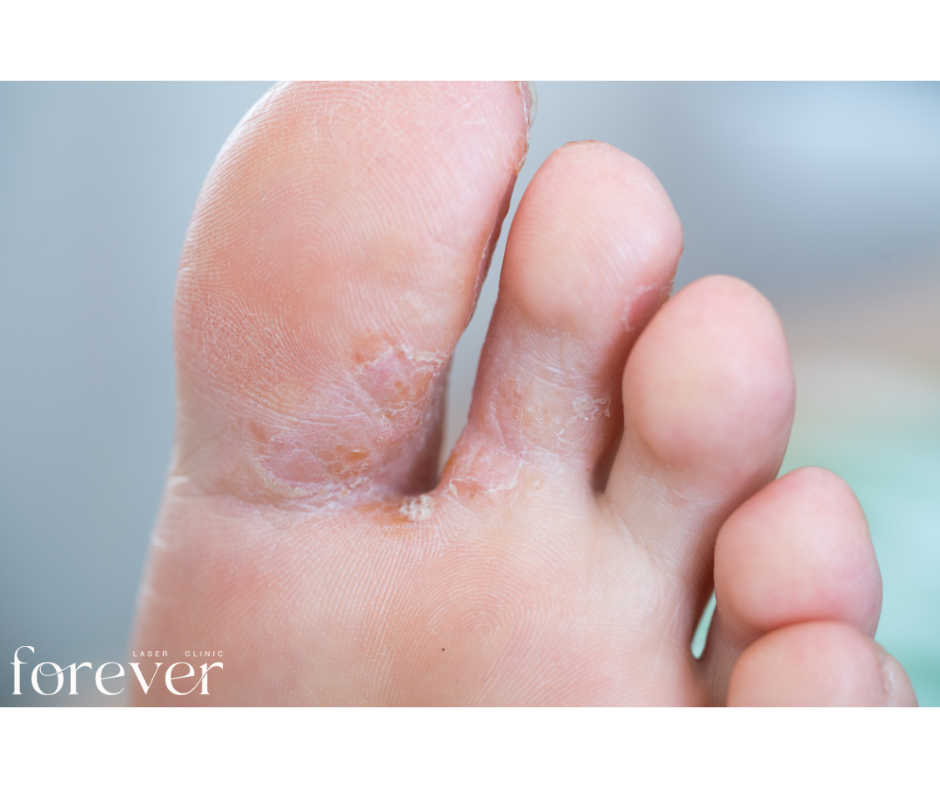
Foot skin mycosis (athlete’s foot)
- Itching and burning between the toes.
- Flaking and dryness of the skin.
- Redness or cracking of the skin.
- Unpleasant odour due to bacterial co-infection.
If you notice such signs, it is important to seek a prompt dermatological evaluation.
Treatment and preventive measures
Treatment of foot mycoses depends on the severity, extent, and type of fungus. It usually includes topical or systemic treatment, in combination with preventive measures to avoid recurrences.
Topical treatment
- Antifungal creams or sprays are applied directly to the affected areas for several weeks.
- Antiseptic foot baths with chlorhexidine or salicylic acid help clean and disinfect.
- Exfoliation of dead skin allows medications to penetrate better.
Treatment for the nails
Onychomycosis requires patience and consistency, as treatment can last for months.
- Topical varnishes with antifungal agents are applied 2–3 times a week.
- In advanced cases, the dermatologist may recommend oral medication.
- Newer methods, such as laser therapy, offer safe and effective management without medication.
Daily preventive measures
Prevention is the best way to avoid foot mycoses, especially in summer:
- Keep your feet clean and dry. Dry well between the toes after showering.
- Change socks daily and prefer cotton or absorbent ones.
- Avoid tight and synthetic shoes. Choose breathable materials such as leather or canvas.
- Don’t walk barefoot in public spaces such as pools or locker rooms.
- Use your own pedicure tools and avoid sharing them with others.
- Avoid sharing towels. Use a separate one for the feet.
- Disinfect shoes and insoles regularly with special sprays.
Consistency in these simple habits can dramatically reduce the risk of infection.
When a visit to the dermatologist is needed
Although some mild mycoses can improve with simple measures, there are cases where a visit to the dermatologist is necessary.
Consult a specialist if:
- The infection persists for more than two weeks despite topical treatment.
- You notice spread to the nails or other parts of the body.
- There is pain, swelling, or fluid leaking — signs of secondary infection.
- You have diabetes or circulation problems, as mycoses can cause serious complications.
The dermatologist can confirm the diagnosis with microscopic examination or culture and determine the appropriate treatment, avoiding unnecessary delays or wrong medications.
Conclusion
Foot mycoses are a common but completely manageable problem — provided they are recognised in time and treated correctly. In summer, prevention plays a decisive role: keep your feet clean, use your own grooming equipment, and choose breathable shoes.
Call us today
If you notice fungal infections on your feet or nails, do not ignore them. Our dermatologist can offer you safe and effective treatment, tailored to your needs — even during the summer months.