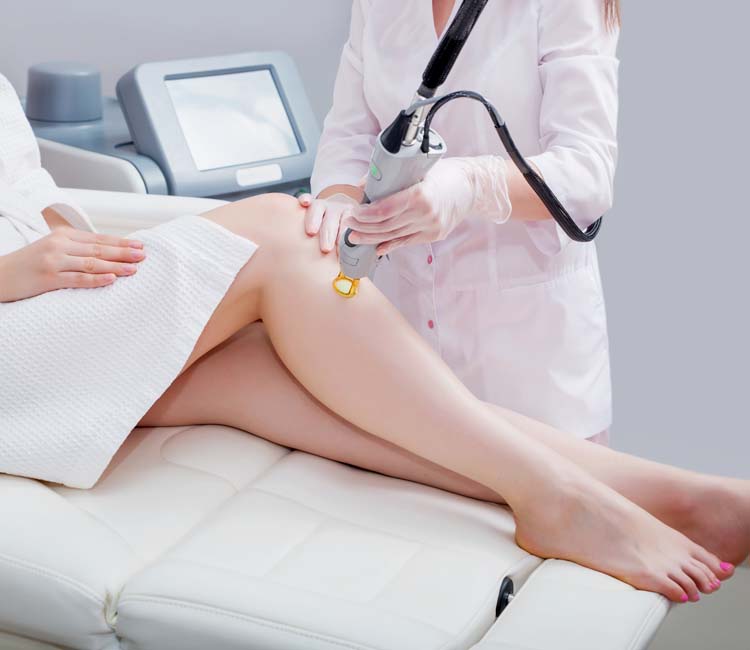
Unwanted hair is a major and daily problem for both women and men. Although there are various ways to remove hair, unfortunately none of them to date offer permanent results. Furthermore, some of the common methods of hair removal can cause skin problems. All of these, however, are now a thing of the past with the help of hair removal using the new Alexandrite Laser technology.
For many people, excessive hair is not only an aesthetic problem. It can have an impact on their psychological well-being and self-confidence. With the Alexandrite Laser, however, anyone can now get rid of excessive hair easily and forever.
What is the Alexandrite Laser?
The Alexandrite laser is a state-of-the-art medical device that uses a crystal called alexandrite, which produces light (high-intensity laser). This particular wavelength of light falls in the red and near-infrared spectrum, exactly at 755 nm, and causes selective photothermolysis.
During photothermolysis, the energy emitted is selectively absorbed by melanin, which, in untanned skin, is concentrated around the hair follicle. It is worth noting that the Alexandrite Laser has an integrated cooling system that protects the epidermis and makes the treatment much less painful.
How does the Alexandrite Laser work?
The pioneering aspect of the Alexandrite laser lies in its ability to emit short pulses of laser light, measured in nanoseconds. This rapid delivery of energy effectively targets the melanin found in hair follicles or in pigmented lesions. When the laser light is absorbed by melanin, it is converted into thermal energy, which damages the targeted structure. In the case of hair removal, this process destroys the hair follicle, preventing future hair growth.
What are the advantages of the Alexandrite Laser?
The Alexandrite Laser has many advantages, which is why specialised dermatologists also recommend it as the most appropriate and safe method of hair removal. Some of its advantages are:
- Precision: The 755 nm wavelength is extremely precise, allowing targeting of specific points on the skin. This precision minimises the chance of damage to surrounding tissue.
- Speed: Alexandrite lasers offer fast treatment sessions due to the very short duration of their pulses. This makes it an effective option for both patients and physicians.
- Efficacy: The Alexandrite laser offers permanent results after a specific number of sessions.
- Pain minimisation: Patients often report minimal discomfort during Alexandrite laser treatments. This is due to integrated cooling systems that help relieve any sensation of heat.
Why is laser hair removal considered safer than other methods?
In most cases, hair growth is a simple aesthetic problem and is mainly located in areas of the body such as the underarms, calves, pubic area, etc. There is also the case of excessive hair growth (hirsutism), in both men and women, which can have a serious impact on patients’ daily lives and psychological well-being. Hirsutism may be due to heredity or to a hormonal disorder.
The classic methods of hair removal that we know — such as the razor, wax, and depilatory creams — eliminate the problem only temporarily, but without reducing density. Very often, they cause side effects such as irritation, folliculitis, and even worsening of hair growth. Laser hair removal is the safest method, as it is not accompanied by these side effects.
Why is more than one session needed?
Many people wonder why more than one session with the Alexandrite Laser is needed to eliminate unwanted hair. To understand the reason, the life cycle of the hair must first be explained.
The hair life cycle has three phases. There is the anagen phase, during which the hair grows; the catagen phase, during which it simply exists in the skin; and the telogen phase, which is the stage at which it falls out. In each session, the hairs that are eliminated are those in the anagen phase, and this is because when hairs are at this stage, they have a higher concentration of melanin in the hair follicle.
What are the applications of the Alexandrite Laser in Dermatology?
The benefits of the Alexandrite Laser do not stop at hair removal but extend to various other dermatological applications, such as:
- Treatment of pigmented lesions: Alexandrite lasers are highly effective at removing pigmented lesions such as freckles, age spots, and marks. The targeted laser energy breaks down the excess melanin, leaving behind clear, even skin.
- Tattoo removal: Alexandrite lasers are capable of breaking down tattoo pigments, causing them to fade with multiple treatment sessions.
- Skin rejuvenation: Alexandrite lasers can boost collagen production and improve skin texture, reducing the appearance of fine lines and wrinkles. This rejuvenation process results in smoother and more youthful-looking skin.
What are the applications of the Alexandrite Laser in Venereology?
Beyond dermatology, the Alexandrite laser also plays a very important role in venereology. Its applications in this field include:
- Treatment of genital warts: Alexandrite lasers can target and remove genital warts caused by certain strains of the human papillomavirus (HPV). The precise delivery of energy minimises damage to healthy tissue.
- Treatment of vaginal atrophy: In cases of vaginal atrophy, where the vaginal walls become thin and dry, Alexandrite laser treatments can stimulate collagen production and rejuvenate vaginal tissues, improving the patient’s life.
- Vaginal rejuvenation: The Alexandrite laser’s ability to stimulate collagen and promote blood flow can improve the appearance and feel of the vagina, improving the patient’s sex life.
Conclusions
In the field of dermatology and venereology, the Alexandrite laser has emerged as a powerful tool that offers unique capabilities. With its precision, speed, and effectiveness, it continues to pave the way for advanced treatments that enhance both skin health and well-being.
As technology continues to evolve, the Alexandrite laser remains at the forefront, offering even more innovations and benefits for the future of dermatology and venereology.